Concrete Crack Injection in Australia: Complete Guide for Homeowners in 2026
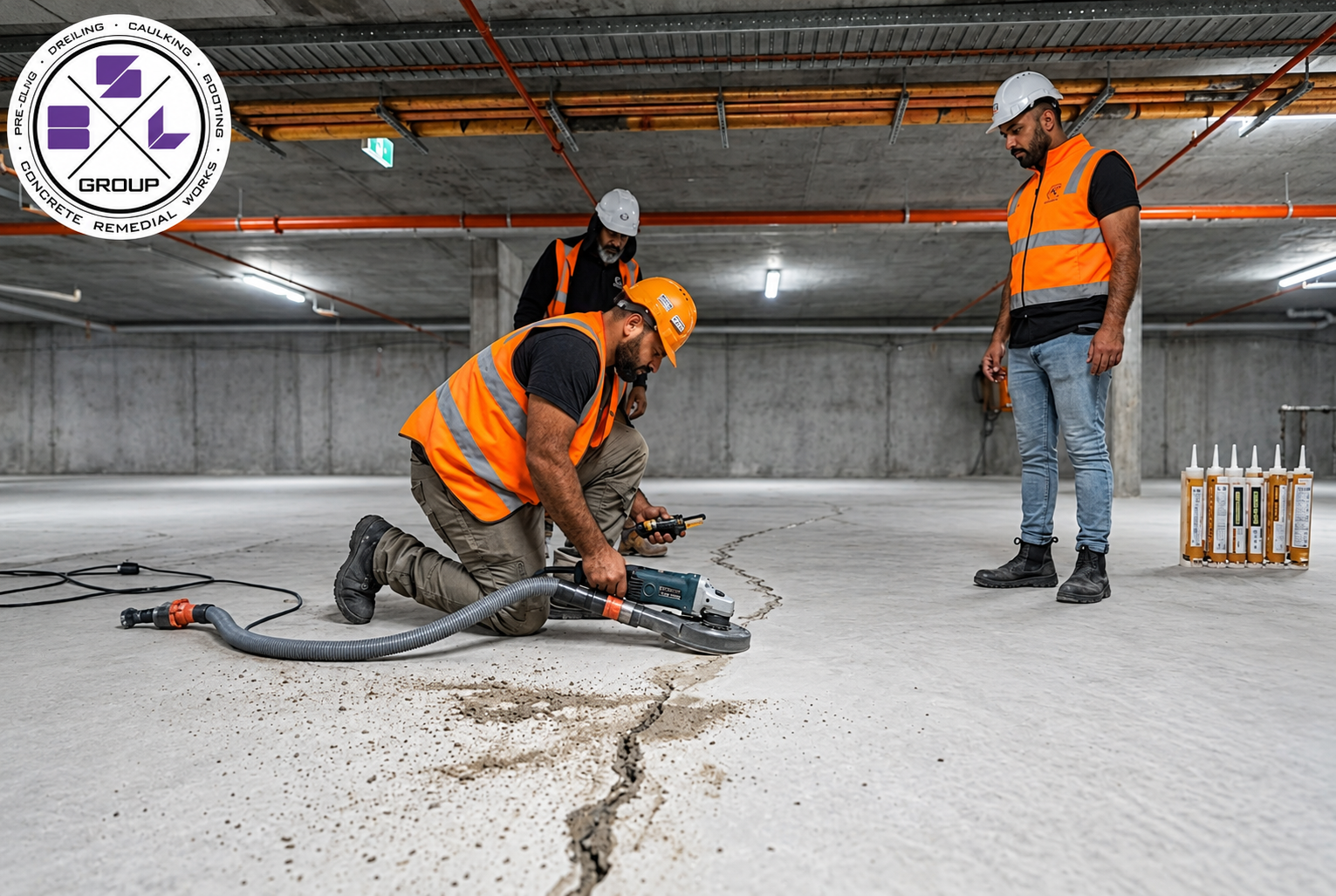
Concrete cracks are one of the most common headaches for Australian homeowners – and also one of the most ignored. Whether it’s your foundation shifting with the seasons, reactive clay doing its thing under the slab, or water quietly corroding your steel reinforcement, a crack that looks minor today can quickly become a costly structural problem. This guide walks you through everything you need to know about concrete crack injection in Australia – what causes cracks, how the repair works, what it costs, and when to call in the pros.
Does your slab or foundation wall have cracks in it? Trust us, this is something you can’t brush off. Yes, concrete cracking is very common in Australia – but ignoring it is where things go downhill fast.
This guide breaks down everything you need to know about concrete crack injection: what it is, when you need it, how it works, and what it’ll cost you. Just simple explanations in plain terms from tradies who’ve seen it all.
Why Does Concrete Crack in the First Place?
Australian conditions are tough on concrete. Here’s what’s actually going on behind those cracks:
| Cause | What’s Happening |
|---|---|
| Shrinkage during curing | All concrete shrinks as it dries out – even a perfect pour will throw up hairline cracks in the first few weeks |
| Ground movement | Reactive clay soils (big problem in Melbourne, Brisbane, Adelaide) swell and shrink with moisture, pushing and pulling at your footings |
| Temperature swings | Forty degrees in January, single digits in July – concrete expands and contracts with every season and eventually something gives |
| Poor reinforcement | If the reo bar was placed wrong or skimped on during the original pour, there’s not enough steel holding things together under load |
| Water & corrosion | Once moisture reaches the steel reinforcement, rust forms. Rust expands. That expansion breaks the concrete apart from the inside – slow but brutal |
| Heavy loads | Heavy vehicles, equipment, or loads that the slab was never designed for will stress concrete well past its limits |
And the big deal? If water gets in through a crack, it goes after your steel reinforcement. Rust forms, expands, and the concrete spalls and cracks even more. And if left untreated long enough, you’ve got a structural problem on your hands that’s a very expensive fix.
What Is Concrete Crack Injection?
Crack injection is exactly what it sounds like – injecting a specialised resin directly into a crack under controlled pressure to seal it up, bond the concrete back together, or stop water coming through.
Why it’s a perfect repair method:
- Non-destructive – no jack-hammering, no major demolition
- Works on cracks that are too narrow to patch by hand
- Restores structural integrity or creates a watertight seal, depending on the resin used
- Done properly, the repaired crack is often stronger than the surrounding concrete
It’s a completely different process than slapping some filler over the top of the cracks. Surface patching is cosmetic. Crack injection actually gets into the crack and fixes the issue from the inside out.
The Two Main Types of Concrete Crack Injection in Australia
Look, cracks vary in nature. So, you need different types of resins to fix them. Here’s the rundown:
Epoxy Crack Injection – For Structural Repairs
Best for: Dry, stable cracks in foundations, beams, slabs, columns
| Feature | Detail |
|---|---|
| Purpose | Restore structural strength |
| How it works | Epoxy resin bonds the two sides of the crack together |
| Strength | Hardened epoxy is often stronger than the original concrete |
| Flexibility | Rigid – not suitable for cracks that are still moving |
| Common uses | House foundations, garage slabs, structural beams |
Polyurethane (PU) Crack Injection – For Waterproofing
Best for: Wet, leaking, or actively moving cracks
| Feature | Detail |
|---|---|
| Purpose | Stop water ingress, seal the crack |
| How it works | PU resin expands on contact with moisture, fills voids |
| Flexibility | Stays flexible – handles minor ongoing movement |
| Common uses | Basement walls, retaining walls, wet areas, and carpark decks |
Bottom Line
Got water coming through? Polyurethane (PU) is your best bet. Got a structural crack in a dry area? Go for epoxy.
How the Job Actually Gets Done: Step-by-Step
Here’s what an expert does on-site to inject a concrete crack:
- Inspect and assess – measure crack width and depth, and check if it’s active (still moving) or dormant
- Clean the crack – remove loose debris, dust and contamination
- Install injection ports – small plastic ports are fixed along the length of the crack at intervals
- Surface seal – the face of the crack gets sealed with epoxy paste, leaving only the ports open
- Pressure-inject the resin – starting at the lowest port, resin is pumped in until it flows out the next port up
- Cure and finish – ports are removed, the surface is cleaned up, and the job’s done
The whole process is very tidy. A standard residential crack can be done in a few hours, and the structure’s good to go once the resin cures.
Where You’ll See Crack Injection Used
Residential (your home):
- House foundations and footings
- Basement and cellar walls
- Garage slabs
- Retaining walls
- Driveways and patios
Commercial and infrastructure:
- Multi-storey carparks
- Bridges and tunnels
- Concrete tanks and reservoirs
- Structural columns
- Industrial slabs
Warning Signs – When Should You Call Someone?
Don’t wait until a hairline crack becomes a full-blown problem. You need to call in a professional if you’re seeing any of these:
- Cracks wider than 0.3 mm – anything beyond a hairline needs attention
- Water leaking through concrete – water ingress is already happening
- Cracks that are growing or spreading – active cracking means the cause is ongoing
- Uneven or sunken floors – could signal foundation movement
- Damp patches or efflorescence (white salt stains) on walls – moisture’s getting through
- Rust stains near cracks – your steel reinforcement is already corroding
Hairline vs Structural – What’s the Difference?
| Type | Width | Risk Level | Action |
|---|---|---|---|
| Hairline | < 0.1 mm | Low – cosmetic only | Monitor, seal if needed |
| Moderate | 0.1–0.3 mm | Medium – monitor closely | Professional assessment |
| Structural | > 0.3 mm | High – don’t ignore | Crack injection required |
| Wide/active | > 1 mm | Critical | Immediate professional attention |
What Does Concrete Crack Injection Cost in Australia in 2026?
Good question. Look, the cost varies from project to project, but here’s a rough estimate:
Typical price range: AUD $300–$800 per linear metre
What pushes the cost up or down:
- Crack length and depth – longer, deeper cracks need more resin and time
- Access – is it easy to get to, or does the tradie need to crawl through a tight basement?
- Resin type – epoxy costs more than PU; structural jobs cost more than waterproofing jobs
- Extent of damage – one crack vs a network of cracks across a whole slab
- Engineer involvement – structural cracks often need an engineer’s report
Getting two or three quotes is always smart. And honestly, a proper fix now is a fraction of what you’ll pay if the problem gets worse.
DIY vs Calling a Pro – Be Honest With Yourself
You can buy crack injection kits at hardware stores. But here’s the thing: there’s a big difference between fixing a cosmetic hairline crack on a garden wall and injecting a structural crack in your home’s foundation.
| Feature | DIY Kit | Professional Injection |
|---|---|---|
| Equipment | Hand-pump applicator | Calibrated pressure injection gear |
| Resin quality | Consumer-grade | Industrial-spec resins |
| Correct resin selection | Easy to get wrong | Assessed based on crack type |
| Pressure control | Limited | Controlled and consistent |
| Compliance | N/A | Meets AS 3600 concrete standards |
| Warranty | None | Usually provided |
For hairline surface cracks, DIY may be fine. But for anything structural, anything with water ingress, or anything in a foundation or load-bearing element, you need a professional. Full stop.
Choosing the Right Specialist in Melbourne and Australia
Not every concretor does crack injection. Look for:
- Experience with structural and remedial concrete repair
- Licensed and insured – always check this
- Uses quality resin systems – ask what brand they’re using
- Can arrange an engineering assessment if needed
- Offers a warranty on the repair
BSL Group, based in Melbourne’s Epping, are specialists in concrete remedial work, including patching, repair, grouting, caulking, and structural remediation across residential and commercial sites. With 30+ years in the game, we’re the type of crew who actually understand concrete – not just how to pour it, but how to fix it right.
The Bottom Line
Concrete cracks – it’s just what concrete does. But leaving a structural crack to sit and get worse? That’s where it gets costly.
Concrete crack injection is a proven, non-invasive repair method that stops water ingress, bonds cracked sections back together, and extends the life of your concrete – all without tearing anything apart.
So, if you spot a crack that’s growing, leaking, or wider than a few millimetres, don’t leave it ’til arvo. Get a professional to assess it. The earlier you act, the cheaper the fix. That’s actually the most important advice.
FAQs
What is concrete crack injection, and how does it work?
A tradie will pump epoxy or polyurethane resin directly into the crack under pressure, filling it from the inside out. Epoxy bonds the concrete back together; polyurethane creates a watertight seal. And it’s an efficient solution, not a cover-up job.
When should I use concrete crack injection in my Australian home?
If you’ve got cracks wider than 0.3 mm, water seeping through, or a crack that’s visibly growing – don’t wait for some other time. Rust stains, damp patches, or uneven floors nearby are also signs that something’s wrong underneath. Get a professional out sooner rather than later.
What are the differences between epoxy and polyurethane injection?
Got a dry, stable crack? Epoxy’s your best bet – it bonds both sides together and cures harder than the original concrete. Wet or leaking? PU expands with moisture and stays flexible, where epoxy would just crack again. Dry and stable cracks get epoxy, wet and moving ones get PU.
How much does concrete crack injection cost in Australia?
Most jobs run between AUD $300–$800 per linear metre, depending on crack depth, access, and resin type. Structural epoxy repairs sit at the higher end; waterproofing jobs with PU are generally cheaper. Always get 2–3 quotes – and remember, fixing it now beats a full remediation bill later.
Can I perform concrete crack injection myself, or should I hire a professional?
DIY kits are fine for minor surface cracks on a garden wall – but keep them away from anything structural or load-bearing. Without proper pressure equipment and the right resin, you’ll likely end up with a failed repair and the same problem six months down the track. For foundations, basements, or slabs, always bring in a licensed tradie.
How long does a concrete crack injection repair last?
A well-done epoxy repair on a stable crack is essentially permanent – we’re talking decades, not years. PU repairs last a long time, too, though flexible cracks in reactive soil areas may need a check-up down the line. The key is fixing whatever caused the crack in the first place.
Does concrete crack injection prevent further cracking or structural damage?
It stops that specific crack from spreading and cuts off the water ingress that corrodes your steel reinforcement over time. What it won’t do is stop new cracks forming if the root cause – poor drainage, ground movement, or overloading – hasn’t been dealt with. Fix the crack, then fix the cause.
Is concrete crack injection suitable for foundations, driveways, and garages?
Absolutely – it’s used across foundations, basement walls, garage slabs, driveways, retaining walls, and commercial carparks. The resin type changes based on what’s needed, but the method works across all of them. It’s one of the most versatile concrete repair techniques going.
How does climate affect the effectiveness of concrete crack injection in Australia?
Constant temperature swings and reactive clay soils – common across Melbourne, Brisbane, and Adelaide – mean cracks are often still moving, which is why flexible PU resin gets used a lot here. A tradie worth their salt will factor in your local soil and climate before picking a resin. It’s not a one-size-fits-all job.
Are there any risks or mistakes to avoid during concrete crack injection?
Using rigid epoxy on a crack that’s still moving is the most common stuff-up – it’ll just crack again nearby. Skipping the surface seal or injecting at the wrong pressure can also cause the resin to blow out before it penetrates properly. Get a licensed specialist who can tell the difference between a structural repair and a waterproofing job.